
Choose an AI Automation Topic for Your Article
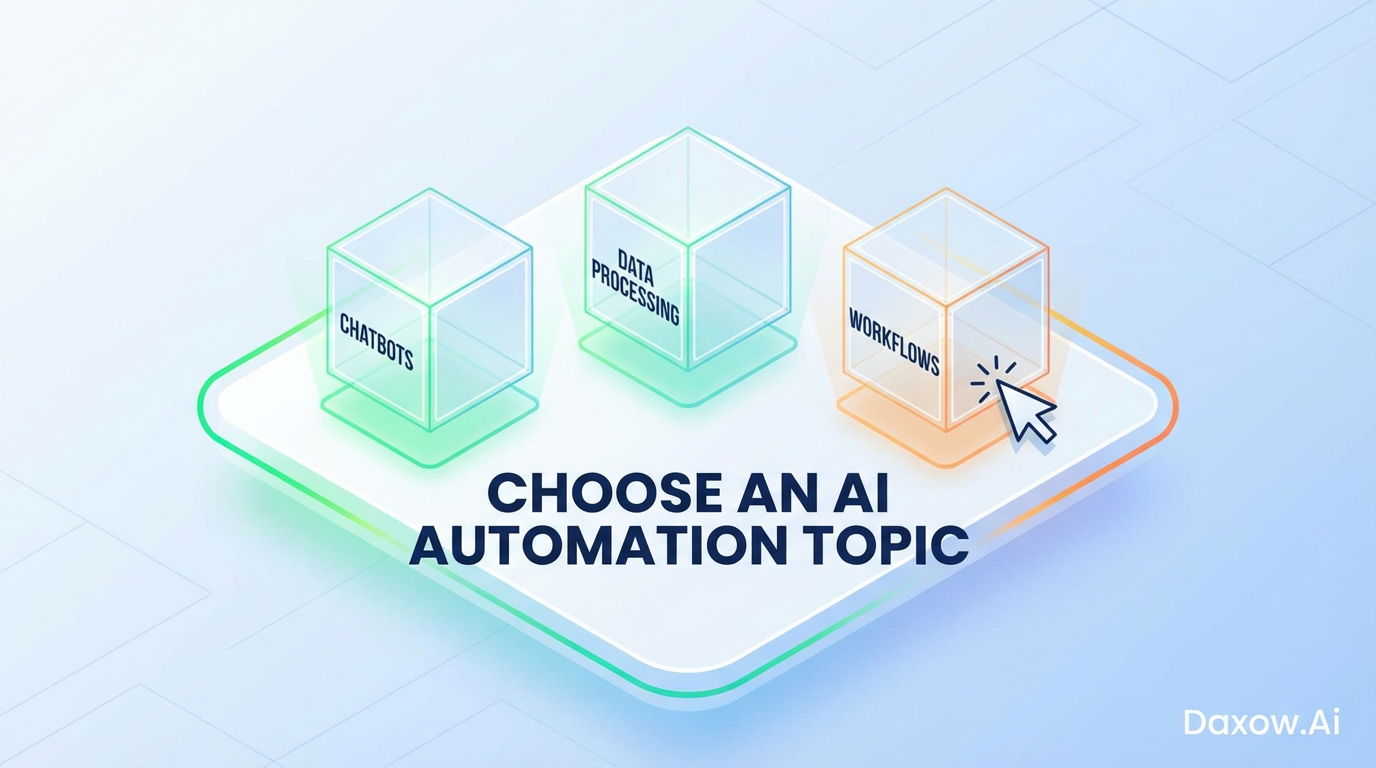
Prompt asking you to pick an AI automation topic (process automation, AI workflow, adoption strategies, hyperautomation) and specify optional details.
AI Workflow Automation: Transforming Business Efficiency with Intelligent Automation
Estimated reading time: 10 minutes
Key Takeaways
- AI workflow automation combines intelligent automation, AI agents, and process discovery to enhance operational efficiency.
- Process discovery plays a pivotal role in identifying automation opportunities within complex workflows.
- Implementing AI-driven automation reduces human error and accelerates decision-making processes.
- Hyperautomation integrates multiple technologies including AI, RPA, and analytics for comprehensive process optimization.
- Successful AI workflow adoption requires strategic planning, stakeholder engagement, and continuous monitoring.
What is AI Workflow Automation?
AI workflow automation refers to the use of artificial intelligence technologies to streamline, automate, and optimize business workflows. By embedding AI agents, machine learning models, and robotic process automation (RPA) tools, organizations can automate complex decision-making and repetitive tasks. This integration not only increases the speed and accuracy of processes but also enables businesses to adapt more quickly to evolving market demands.
Unlike traditional automation, where predefined rules guide process execution, AI workflow automation incorporates intelligent insights, making workflows adaptive and predictive. This next-generation automation paradigm is reshaping industries such as finance, healthcare, e-commerce, and enterprise resource planning by enabling hyperautomation strategies.
Key Components of AI Workflow Automation
AI workflow automation is built on several foundational components that work together seamlessly:
- Intelligent Automation: Combining AI capabilities like natural language processing, computer vision, and machine learning with RPA to automate knowledge-intensive tasks.
- AI Agents: Autonomous agents that can interact with systems, make decisions, and carry out activities without human intervention.
- Process Discovery: Techniques used to map, analyze, and identify automation opportunities within existing business processes using data mining and process mining tools.
- Integration Platforms: Middleware that connects disparate applications and systems, enabling smooth data exchange within automated workflows.
- Analytics and Monitoring: Continuous measurement of workflow performance to enhance AI models and identify further optimization avenues.
Integrating these components results in hyperautomation, where organizations automate diverse processes end-to-end and realize extraordinary efficiency gains.
Benefits of AI Workflow Automation
Adopting AI workflow automation delivers substantial business value across multiple dimensions:
- Increased Operational Efficiency: Automating repetitive and rule-based tasks reduces cycle times and accelerates throughput.
- Improved Accuracy: AI-driven decision-making minimizes errors associated with manual work and rule-based systems.
- Scalability: Automation solutions can be scaled rapidly to handle growing process volumes without proportional increases in headcount.
- Enhanced Customer Experience: Faster and more accurate workflows allow for timely responses and personalized service delivery.
- Cost Reduction: Automating mundane tasks reduces operational costs by reallocating human resources to higher-value activities.
- Data-Driven Insights: Continuous analytics enable proactive improvement of workflows and business strategy alignment.
These benefits are particularly pronounced in industries like finance and enterprise where compliance, accuracy, and speed are crucial. Discover more about how AI implementation can unlock new capabilities below.
Implementing AI Workflow Automation
Successful AI workflow automation requires a well-defined strategy, combining technology, process understanding, and organizational change management. Key steps include:
- Process Assessment and Discovery: Use AI-powered process mining tools to identify bottlenecks and automation candidates.
- Stakeholder Engagement: Collaborate with business units, IT teams, and leadership to ensure alignment and support.
- Technology Selection: Choose AI platforms and RPA tools that integrate well with existing enterprise systems.
- Pilot Projects: Implement automation in targeted workflows to validate approach and demonstrate ROI.
- Scaling and Governance: Develop policies for deployment, monitoring, and continuous improvement across the organization.
Leveraging expertise in process automation and AI-driven workflow orchestration helps to overcome complexity and accelerate time-to-value.
Challenges and Solutions
While AI workflow automation presents exciting opportunities, organizations often face challenges during adoption:
- Data Quality Issues: Poor-quality or siloed data can hinder AI model accuracy. Solution: Invest in data governance and cleansing initiatives beforehand.
- Change Resistance: Employee apprehension toward automation may create obstacles. Solution: Communicate benefits clearly and involve staff in the automation journey.
- Technology Integration: Legacy systems may not support new AI tools natively. Solution: Use flexible integration layers and APIs to bridge systems effectively.
- Security and Compliance: Automation increases attack surfaces if not managed properly. Solution: Embed robust cybersecurity measures and audit trails within workflows.
Partnering with specialists in intelligent automation, such as teams familiar with the solutions at Daxow.ai, can mitigate these issues and drive smooth implementation.
Future Trends in AI Workflow Automation
Looking ahead, several emerging trends will shape AI workflow automation's evolution:
- Hyperautomation Expansion: More organizations will adopt a combination of AI, RPA, and analytics for holistic automation strategies.
- AI-Driven Process Optimization: Continuous learning AI models will dynamically adjust workflows based on real-time performance data.
- Increased Use of AI Agents: Autonomous AI agents will take greater responsibility for collaborative cross-system workflow tasks.
- Industry-Specific Solutions: Tailored automation frameworks addressing regulatory, operational nuances in sectors like healthcare, finance, and e-commerce.
Organizations that embrace these trends promptly will achieve competitive differentiation and operational excellence.
Frequently Asked Questions
What industries benefit most from AI workflow automation?
AI workflow automation is highly beneficial across finance, healthcare, e-commerce, real estate, and large enterprises, where complex, repetitive processes and regulatory compliance demand efficiency and accuracy.
How does process discovery improve automation outcomes?
Process discovery uses AI and mining tools to analyze workflow data, uncover inefficiencies, and identify automatable tasks. This leads to smarter automation design and better resource allocation.
What are the main challenges when adopting AI workflow automation?
Common challenges include data quality issues, change resistance among staff, integration with legacy systems, and ensuring security and compliance throughout automated workflows.
How can businesses measure the ROI of AI workflow automation?
ROI can be measured through reductions in processing time, error rates, operational costs, and improvements in customer satisfaction and compliance adherence.